
Certificates checked, not collected
TrustRise verifies certificates against the issuing body’s own records. Every field carries a computed evidence level, and claims publish only when the evidence behind them holds.

Storage is not verification
Most platforms accept whatever a supplier uploads. An auditor knows the difference between a PDF on file and a certificate someone checked.
A verified certificate in TrustRise means a reviewer compared it against the certification body’s database — scope, number, issuer, validity dates. That is the record you put in front of a retailer’s compliance team.
A person checks the certificate, not an automated read of the PDF.
Nobody can mark their own data stronger than its backing.
A certificate’s change updates every field that relies on it.
Alerts at 60, 30 and 7 days before validity ends.
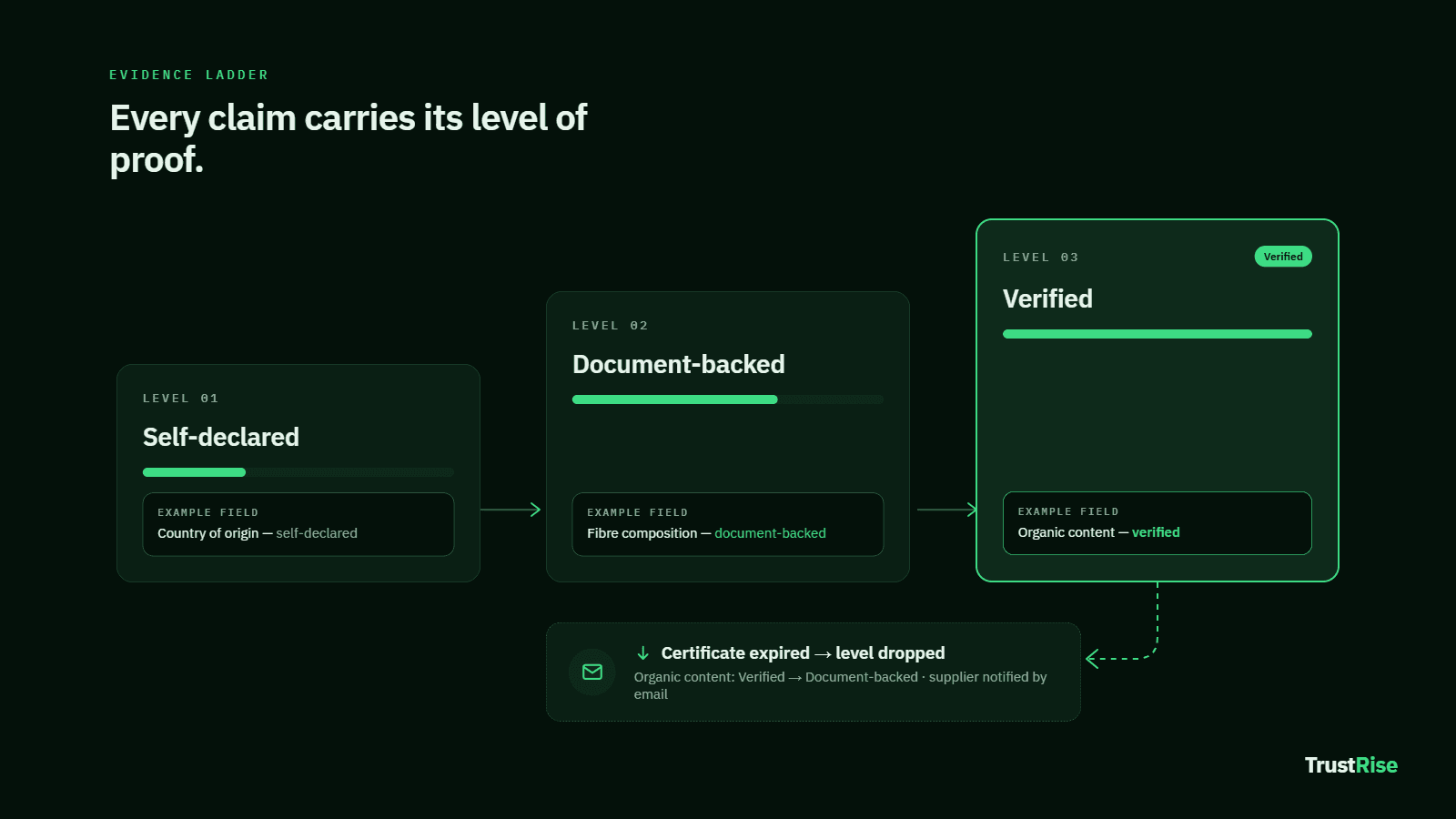
Self-declared is a value with nothing attached. Document-backed has a file. Verified points to a certificate we have checked — and it is the only level you cannot reach by uploading something.
When a level drops, both companies’ owners are emailed with the reason. Upgrades are silent; downgrades need action.
A value with no evidence, or one carrying a blocking validation flag.
A test report, declaration or mill statement is attached.
A checked certificate stands behind the value.
An expiry or rejection emails both companies with the reason.
A certificate starts unverified. The supplier attaches the document and submits it; a certificate with no document cannot be submitted at all.
A reviewer approves or rejects with a reason. Approved certificates carry the reviewer, the timestamp and the note — permanently on the record.
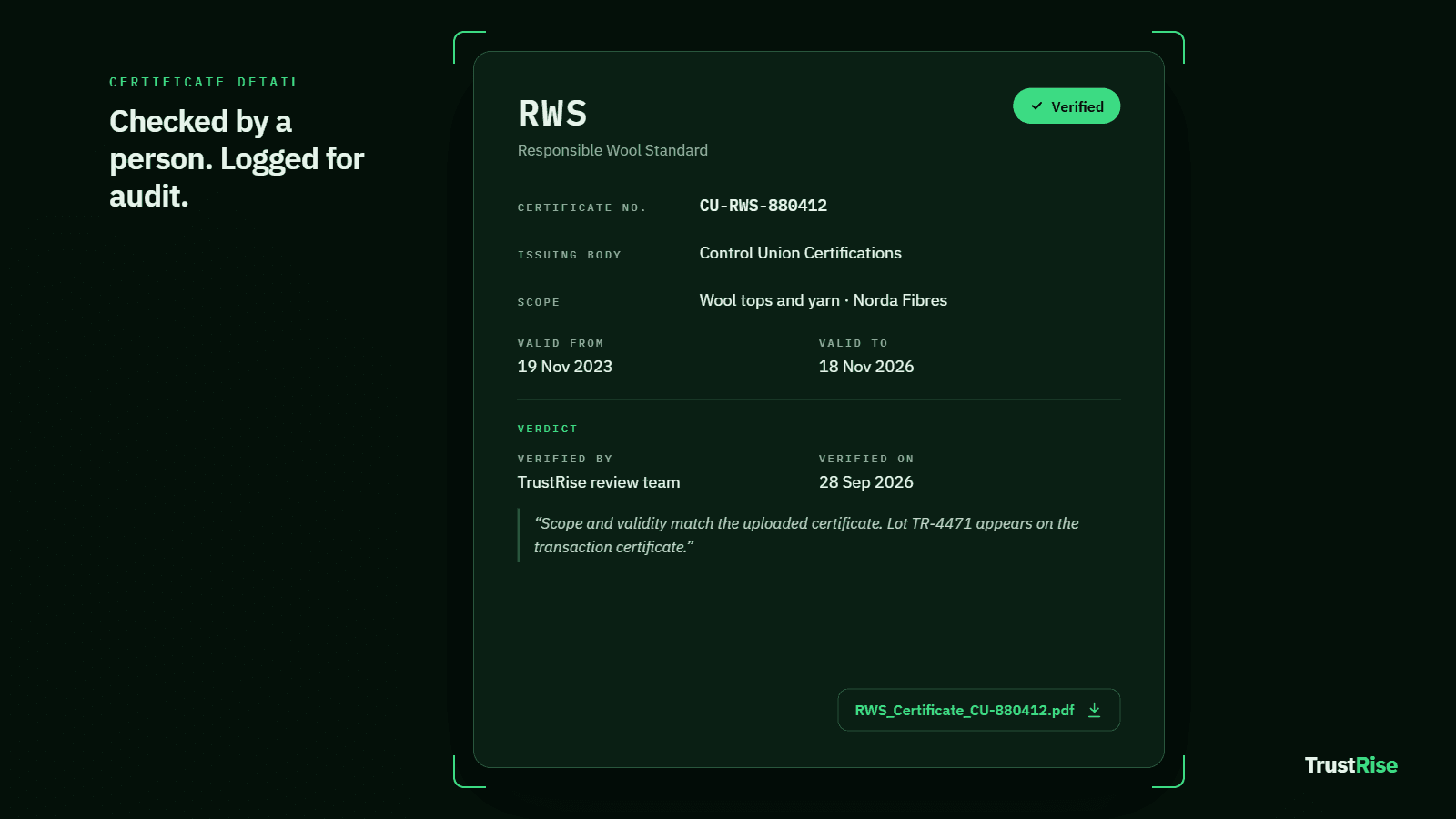
A status anyone could grant themselves would mean nothing.
Change the scope, dates or document and the check no longer applies.
A mandatory reason, and the supplier can correct and resubmit.
An expired certificate is replaced, not renewed in place.
Claim gating
A claim publishes only when its evidence reaches verified. Document-backed is not enough.
When a claim falls short, it stays unpublished and you are shown which field is missing what. A marketing hire cannot publish what legal would not sign.
Claims and their evidence move together or not at all.
You see which field is short before anyone outside does.
A broken mass balance blocks the claim, not just the record.
Arithmetic that can be waived is evidence of nothing.
Publish claims you can stand behind
Start free, map one product, and put the certificates behind your claims through review before you need them.