
What happens after the garment leaves
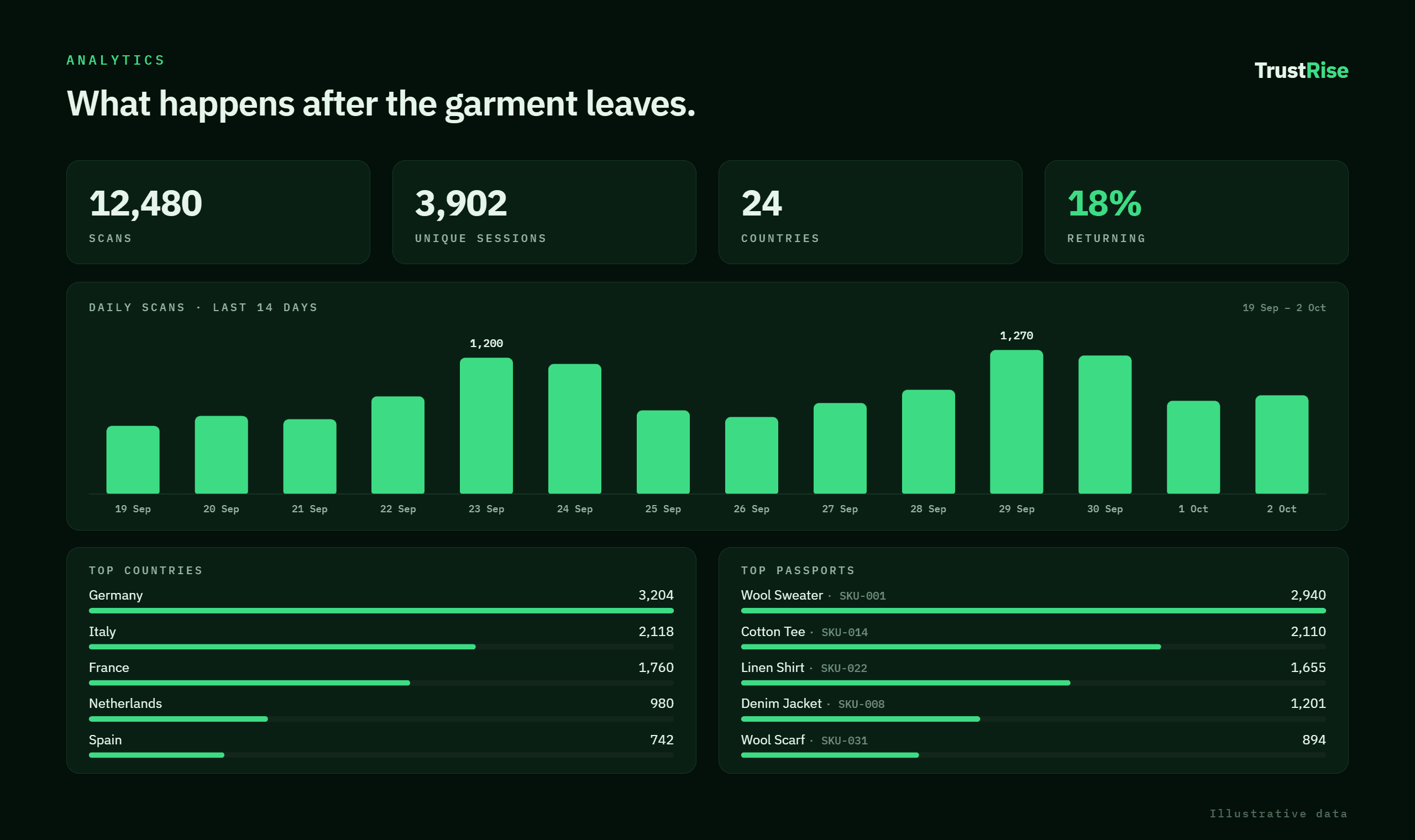
Every passport scan is counted. You see how many people looked, from which countries, on what device, and whether they came back — per product and across your whole catalogue.
Compliance that pays for itself
A Digital Product Passport is a regulatory obligation. It is also the first time a garment has had a direct line to the person wearing it.
Scan data tells you which products people actually look up, which markets care, and whether the QR code on the label is being used at all. Most brands discover the answer is yes, and considerably more often than they expected.
Total views and unique sessions, not just raw hits.
Where your products are being scanned, ranked.
Sessions that came back to the same passport.
Which products draw attention, across the catalogue.
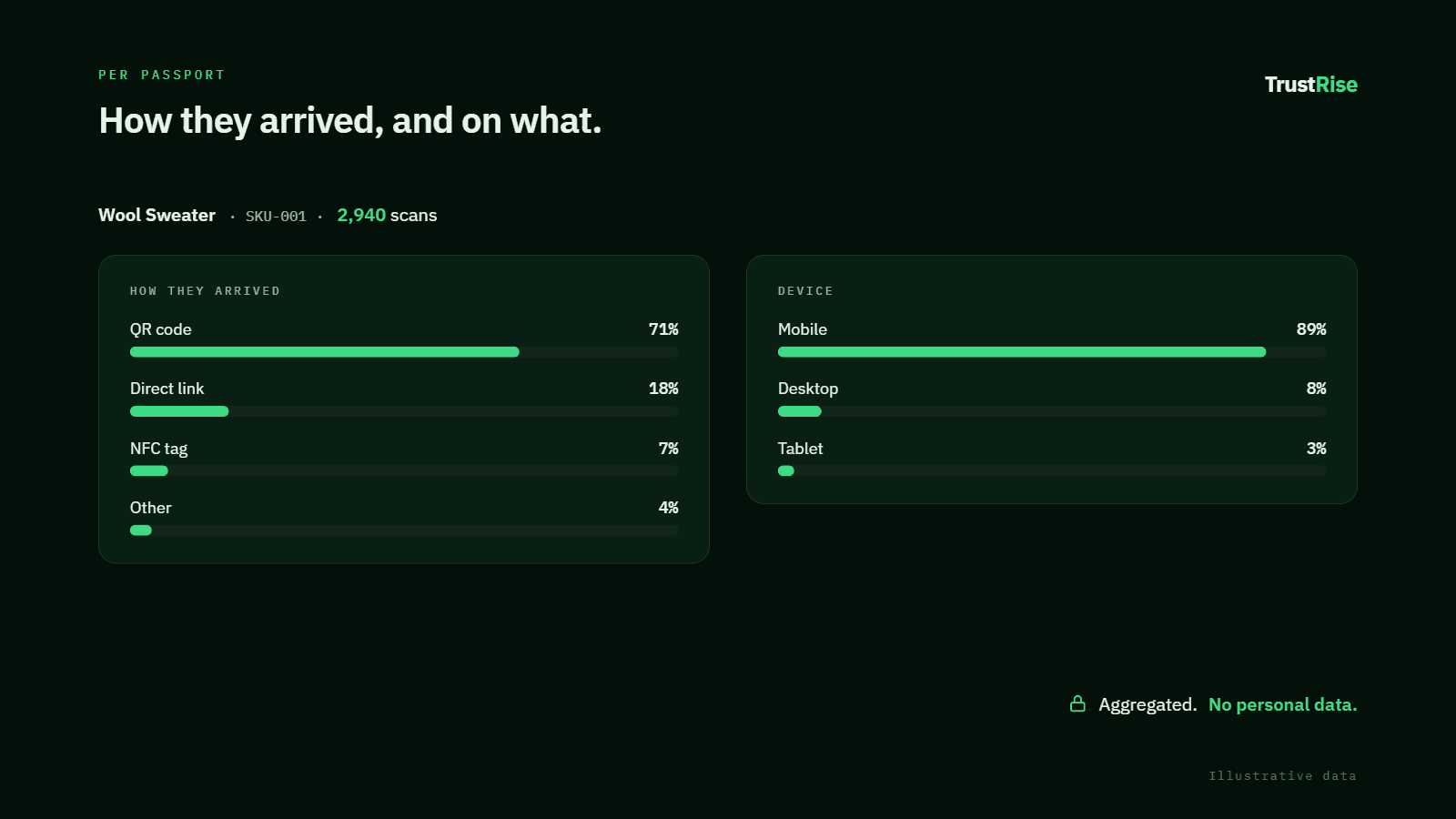
Open any passport and see how people reached it — a scanned QR code, an NFC tag, a direct link, or straight to the URL — and what they were holding when they did.
The device split is usually the most revealing number. Almost everyone scans on a phone, which is why the passport is built for a phone first.
QR, NFC, link or direct, per passport.
Mobile, tablet or desktop.
Daily scans over the last two weeks.
Every number available for a single passport.
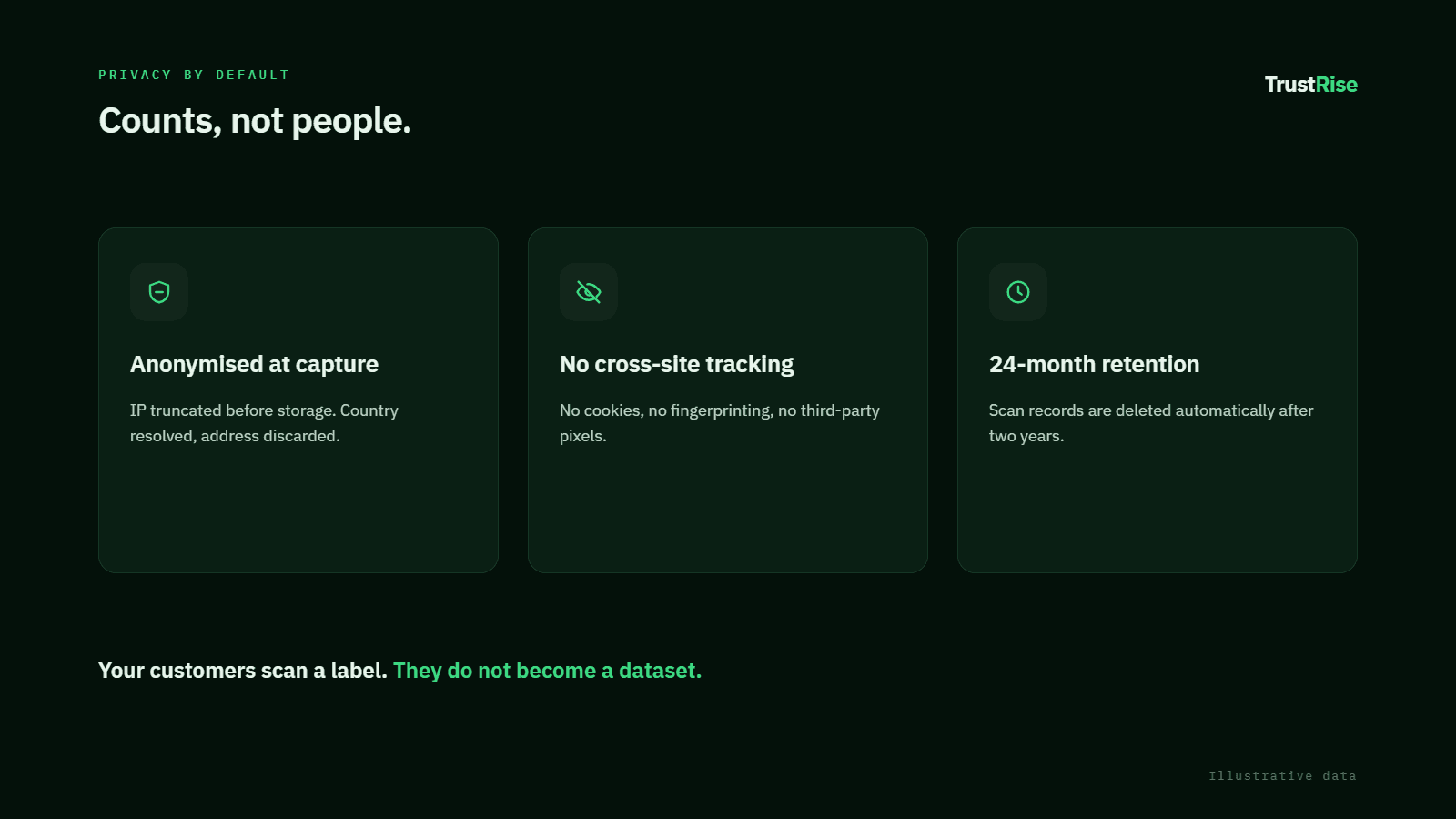
Scan analytics counts events, not people. The IP address is truncated before it is stored — enough to resolve a country, not enough to identify a visitor.
There are no cookies, no fingerprinting and no third-party trackers on the passport page. Records are deleted automatically after 24 months.
The full address is never written to the database.
Nothing is set on the visitor’s device.
Scan data stays in your account.
Records removed after 24 months, without being asked.
See your own numbers
Publish one passport, print the QR, and watch what happens. Analytics is included on every plan, including Free.