
How to Create a Digital Product Passport for Clothing
The fashion industry is entering a new era of product transparency. As European Union sustainability regulations evolve, fashion brands will increasingly need to provide reliable information about the materials, origins, production processes and lifecycle of their products.
November 24, 2026 · Trustrise
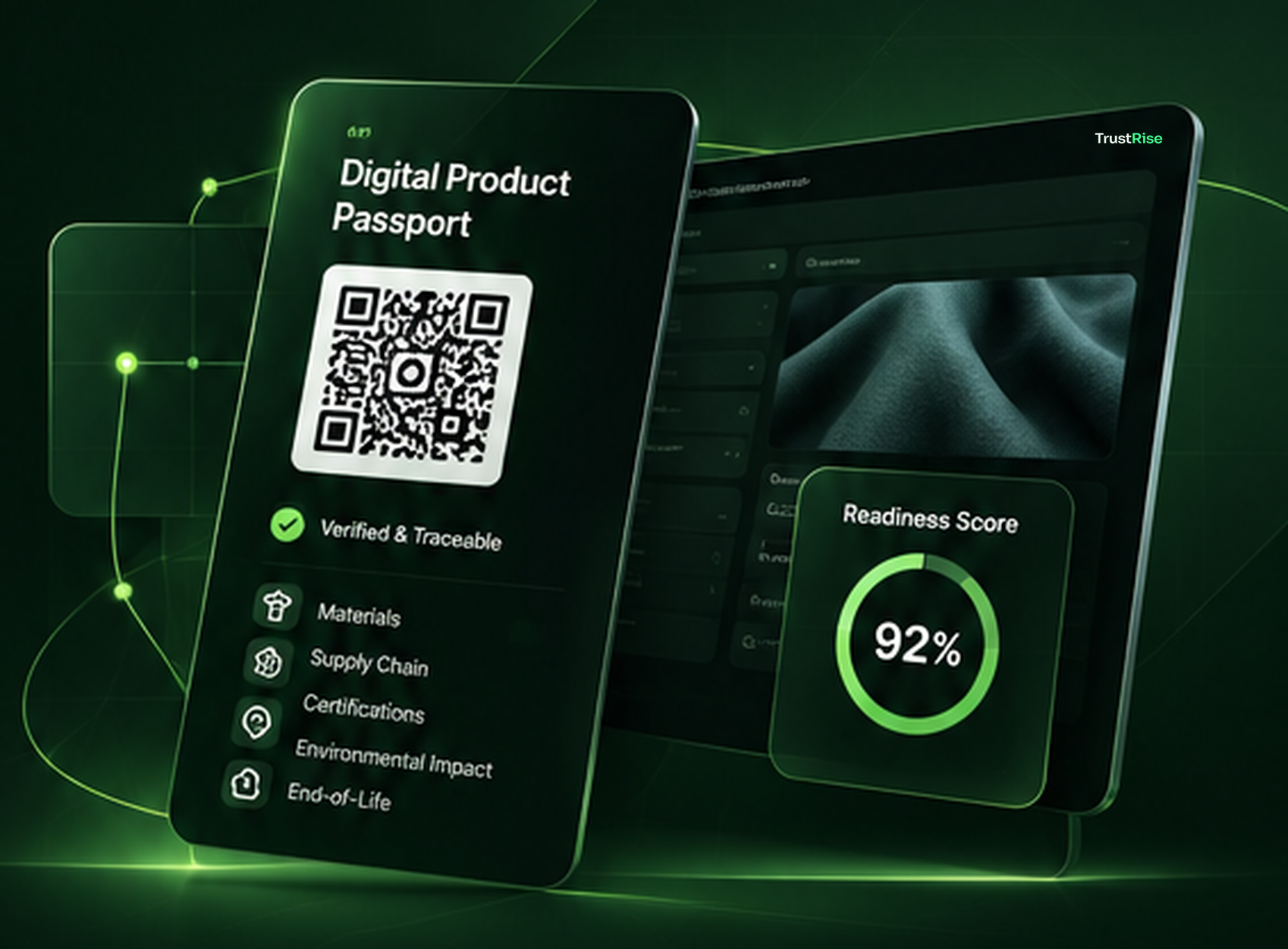
How to Create a Digital Product Passport for Clothing: A Step-by-Step Guide for Fashion Brands
Fashion brands are facing a major shift in how they collect, manage, and communicate product information. As the European Union moves towards introducing Digital Product Passports (DPPs) for textiles and other product categories, businesses need to prepare for a more transparent and traceable way of managing product data.
A Digital Product Passport connects a physical product to a digital record containing important information about its materials, composition, supply chain, environmental impact, certifications, care instructions, and end-of-life options.
But how do you actually create a Digital Product Passport for clothing? What information should it contain? How can you collect data from suppliers? And what tools can help you manage the entire process?
In this guide, we explain how fashion brands can create a Digital Product Passport step by step, from gathering product information to generating a QR code that connects customers and stakeholders to relevant product data.
What Is a Digital Product Passport for Clothing?
A Digital Product Passport for clothing is a digital record connected to a physical garment. It provides structured information about the product throughout its lifecycle, helping brands, consumers, business partners, and relevant authorities access product information.
Typically, a clothing Digital Product Passport can include:
- Product identification: Product name, model, SKU, GTIN, and batch or production information.
- Material composition: Information about fibres, fabrics, recycled materials, and material percentages.
- Supply chain information: Details about suppliers, manufacturers, and production stages.
- Certifications: Relevant certificates and supporting documentation.
- Chemical information: Relevant information about substances and chemical compliance.
- Environmental information: Available data about carbon emissions, water consumption, energy use, and other environmental indicators.
- Care instructions: Guidance on washing, drying, maintenance, and extending product life.
- End-of-life information: Guidance on reuse, recycling, and appropriate disposal.
The exact information required will depend on the applicable EU legislation, the product category, and the final technical requirements established for textiles.
Unlike a traditional product label, a Digital Product Passport can be updated as product information changes, provided the system supports appropriate data management, versioning, and traceability.
Why Should Fashion Brands Start Creating Digital Product Passports?
Digital Product Passports are becoming an important part of the European Union's transition towards more sustainable and transparent products.
The Ecodesign for Sustainable Products Regulation (ESPR) establishes the framework for introducing Digital Product Passport requirements for selected product groups. Textiles and apparel are among the product categories being addressed through this process.
For fashion brands selling in the European market, preparing early can offer several advantages.
1. Prepare for upcoming EU requirements
Fashion brands should not wait until the final implementation deadlines to understand their product data. Preparing early gives businesses time to identify missing information, communicate with suppliers, and improve internal data management processes.
The specific requirements and implementation dates for textiles will depend on the relevant delegated legislation and applicable transition periods. Businesses should therefore follow official EU updates rather than assume that one universal deadline applies to every textile product.
2. Improve supply chain transparency
Fashion supply chains often involve multiple suppliers, manufacturers, processing facilities, and countries. Collecting accurate information across these stages can be challenging.
A Digital Product Passport provides a structured way to organise product and supplier information, helping brands understand where materials come from and how products are manufactured.
3. Build customer trust
Consumers increasingly want to understand what they are buying. They may want to know what a garment is made of, where it was produced, and how to care for it.
By making relevant product information accessible through a QR code, brands can offer customers more transparency at the point of purchase and beyond.
4. Organise product information in one place
Many businesses store product information across spreadsheets, emails, supplier documents, and internal systems. This can make it difficult to maintain consistent and up-to-date records.
A Digital Product Passport platform helps bring this information together in a structured digital environment.
5. Create new opportunities for product communication
A Digital Product Passport is not only a way to organise compliance-related information. It can also become a digital touchpoint between a brand and its customers.
Brands can use it to communicate material choices, product characteristics, care guidance, and available sustainability information in a clear and accessible way.
How to Create a Digital Product Passport for Clothing: 7 Steps
Creating a Digital Product Passport does not have to be complicated. With a structured process and the right software, fashion brands can start building product records and gradually improve the quality of their data.
Here are seven practical steps to follow.
Step 1: Identify the products that need a Digital Product Passport
Start by deciding which products you want to include in your Digital Product Passport system.
If your business sells multiple clothing categories, you can begin with a selected product range rather than trying to digitise your entire catalogue at once.
For each product, identify the information needed to distinguish it from other products.
- Product name and description
- Product category
- SKU or internal product reference
- GTIN, where available and applicable
- Model or product identifier
- Production batch or lot information, where relevant
- Product images
Accurate identification is important because the Digital Product Passport must be connected to the correct product. Brands should also consider how product variants, such as different sizes and colours, will be identified and managed.
Step 2: Collect material composition data
Material composition is one of the most important parts of a clothing Digital Product Passport.
Start by identifying the fibres and materials used in each product. This information should be collected from reliable product specifications and supplier documentation.
For example, a garment might contain:
- 80% organic cotton
- 15% recycled polyester
- 5% elastane
Depending on the product and applicable requirements, brands may also need more detailed information about the materials, their origin, and the use of recycled or other specific material types.
Do not rely on estimates when accurate supplier information is available. Keep supporting documents and ensure that the information recorded in the passport is consistent with the product's actual composition.
Step 3: Map your supply chain and invite suppliers
One of the biggest challenges in creating a Digital Product Passport is collecting information from different supply chain partners.
A fashion brand may work with separate suppliers for raw materials, fabrics, dyeing, processing, manufacturing, and finishing. Each partner may hold information that is relevant to the final product record.
Start by mapping the suppliers involved in producing your garment.
Then identify what information you need from each supplier. This may include:
- Company and facility information
- Country of production
- Material specifications
- Production or processing information
- Relevant certificates and declarations
- Available environmental data
Instead of collecting everything manually through long email conversations, brands can use a Digital Product Passport platform that allows suppliers to contribute information directly.
For example, TrustRise allows brands to invite suppliers to provide relevant product and supply chain information. This helps centralise the information needed to build and maintain product passports.
Step 4: Add certifications and chemical information
Certifications and chemical-related information can help provide additional context about a product and its materials.
Depending on the product, available documentation, and applicable requirements, brands may include:
- Relevant textile and material certifications
- Supplier declarations
- Testing reports
- Information about restricted substances
- Relevant chemical compliance documentation
Examples of certifications that may be relevant to textile products include GOTS, OEKO-TEX, and the Global Recycled Standard (GRS). Their relevance depends on the specific product and the scope of the certification.
It is important to distinguish between a certificate that applies to a supplier, a facility, a material, or a finished product. A brand should not present a certification as proof of something it does not actually cover.
Keep the supporting documents available and make sure that certificates are valid and relevant to the product information being communicated.
Step 5: Add care, maintenance, and end-of-life information
A Digital Product Passport can help consumers understand how to care for a garment and make better decisions throughout its useful life.
Depending on the product, consider including:
- Washing instructions
- Drying recommendations
- Ironing instructions
- Maintenance guidance
- Instructions for extending product life
- Reuse and recycling guidance
- End-of-life recommendations
Clear care instructions can help consumers maintain garments for longer and reduce avoidable damage caused by incorrect washing or maintenance.
End-of-life information can also explain whether particular materials or components may be suitable for reuse or recycling, based on available information and local conditions.
Step 6: Add available environmental information
Environmental information can provide further insight into the impact of a product and its production processes.
Where reliable data is available, a clothing Digital Product Passport may include information such as:
- Carbon emissions
- Water consumption
- Energy consumption
- Recycled material content
- Relevant environmental assessments
- Life Cycle Assessment (LCA) information
Brands should be careful when communicating environmental claims. Information should be supported by appropriate evidence, and the methodology or scope should be clear where relevant.
If certain environmental data is not available, it is better to identify the information gap than to publish unsupported estimates or claims.
Step 7: Generate a QR code and publish the Digital Product Passport
Once the required product information has been added and reviewed, the next step is to make the Digital Product Passport accessible.
A QR code can connect the physical garment to its digital product record. Customers and other authorised stakeholders can scan the code using a compatible smartphone or device to access the available information.
Before publishing, make sure that:
- The passport is connected to the correct product.
- Product information has been reviewed for accuracy.
- Supporting documentation is organised.
- Access permissions are configured appropriately.
- The QR code opens the correct digital record.
- The passport can be updated when information changes.
Depending on the platform, QR codes can be downloaded in different formats and added to product labels, packaging, hangtags, or other suitable product communication materials.
At this point, your product has a digital record that can be accessed through its QR code and maintained as product information evolves.
What Information Should a Clothing Digital Product Passport Include?
The exact data requirements for textile Digital Product Passports will be determined by the applicable EU rules and technical specifications. However, fashion brands can already start organising the main categories of product information.
| Information category | Examples of data |
|---|---|
| Product identification | Product name, SKU, GTIN, model, batch information |
| Materials | Fibre composition, material percentages, recycled content |
| Supply chain | Suppliers, manufacturers, production locations |
| Certifications | Relevant certificates, declarations, supporting documents |
| Chemicals | Relevant chemical and restricted-substance information |
| Care and maintenance | Washing, drying, ironing, and maintenance instructions |
| Environmental data | Available carbon, water, energy, and LCA information |
| End of life | Reuse, recycling, and disposal guidance |
Not every product will have the same data requirements. The information needed may vary according to the product type, materials, applicable legislation, and the role of the business in the supply chain.
What Is the Best Way to Manage Digital Product Passports?
Fashion brands can technically collect product information using spreadsheets, shared folders, and internal databases. However, managing multiple products and suppliers this way can quickly become difficult.
As the number of products increases, businesses need a more structured approach to collecting, reviewing, updating, and publishing product information.
A dedicated Digital Product Passport platform can help brands manage these processes in one place.
What should you look for in DPP software?
When choosing Digital Product Passport software, consider the following capabilities:
- Product management: Create and manage digital records for individual products.
- Structured data fields: Organise product identification, materials, supply chain, certifications, and other information.
- Supplier collaboration: Invite suppliers to contribute the information relevant to their role.
- Document management: Keep certificates and supporting files organised.
- Data review: Review and approve information before it is published.
- QR code generation: Generate QR codes that connect physical products to their digital records.
- Data updates: Update product information when changes occur.
- Version history: Maintain a record of changes to product information.
- Integration options: Consider whether the platform can connect with your existing ecommerce or product management systems.
The right software should make the process easier, not introduce unnecessary complexity. Look for a platform that allows your team to start with essential information and expand the passport as more data becomes available.
How TrustRise Helps Fashion Brands Create Digital Product Passports
TrustRise is a Digital Product Passport platform designed to help brands organise product information, improve supply chain transparency, and prepare for the evolving European product data landscape.
Instead of managing product details across disconnected spreadsheets, emails, and documents, brands can use TrustRise to create and manage Digital Product Passports in one structured environment.
Create product passports through a guided process
TrustRise provides a structured workflow that helps brands add essential product information step by step, including product details, materials, supply chain information, certifications, chemical data, care instructions, and environmental information.
Collaborate with suppliers
Brands can invite suppliers to contribute relevant information to their product records. This helps reduce fragmented communication and makes it easier to collect information from different stages of the supply chain.
Manage documents and product information
Organise relevant product documentation and information in one place, making it easier to review and maintain product records as information changes.
Generate QR codes for your products
Once a product passport is ready, brands can generate QR codes and download them in suitable formats for use on product labels, packaging, and other materials.
Keep product information organised over time
Product information can change. Materials, suppliers, certificates, and other details may need to be updated. TrustRise supports structured product data management and version tracking to help brands maintain their records.
Whether you are starting with a small collection or managing a larger product catalogue, TrustRise helps make Digital Product Passport creation more accessible and manageable.
Ready to Create Your First Digital Product Passport?
Start organising your product information, collaborating with suppliers, and preparing your fashion brand for the next generation of product transparency.
Start Creating PassportsCommon Mistakes to Avoid When Creating a Digital Product Passport
Creating a Digital Product Passport is not simply about generating a QR code. The quality of the passport depends on the accuracy, consistency, and management of the information behind it.
Here are some common mistakes fashion brands should avoid.
1. Waiting until the last minute
Collecting product and supplier information can take time. Waiting until regulatory requirements are fully implemented may leave businesses with limited time to organise their data and internal processes.
2. Relying on incomplete supplier information
Product information is often distributed across several suppliers. Brands should identify missing information early and establish a clear process for collecting and reviewing supplier contributions.
3. Publishing unsupported sustainability claims
Environmental claims should be accurate and supported by appropriate evidence. Avoid publishing unverified claims about recycled content, carbon emissions, water consumption, or sustainability performance.
4. Treating the QR code as the Digital Product Passport
A QR code is only the access point. The actual Digital Product Passport is the structured digital information connected to the product. Generating a QR code without reliable product data does not create a meaningful passport.
5. Ignoring future data updates
Product information may change over time. Brands should have a process for updating records, reviewing documents, and maintaining a clear history of changes.
6. Choosing software that cannot scale
A solution that works for a few products may become difficult to manage when the product catalogue grows. Consider supplier collaboration, structured workflows, product identification, and data management before selecting a platform.
When Should Fashion Brands Start Preparing for Digital Product Passports?
The best time to start preparing is before the relevant requirements become applicable to your products.
The European Union's Ecodesign for Sustainable Products Regulation establishes the framework for Digital Product Passports. However, the specific requirements for each product group are introduced through further measures, including delegated acts.
For textiles and apparel, brands should monitor the European Commission's work programme and official announcements for the final requirements, scope, and implementation timeline.
In the meantime, businesses do not need to wait to improve their product data management. They can already begin by:
- Creating a structured product information database.
- Reviewing material composition data.
- Mapping suppliers and production stages.
- Collecting relevant certificates and documentation.
- Identifying missing environmental information.
- Establishing processes for reviewing and updating product records.
- Testing Digital Product Passport software with selected products.
Early preparation can help reduce the pressure of future implementation and make it easier to adapt when the detailed requirements become clear.
Frequently Asked Questions About Digital Product Passports for Clothing
What is a Digital Product Passport for clothing?
A Digital Product Passport for clothing is a digital record connected to a garment. It can contain information about product identification, material composition, suppliers, manufacturing, certifications, care instructions, environmental data, and end-of-life guidance.
Are Digital Product Passports mandatory for clothing in the EU?
The EU's Ecodesign for Sustainable Products Regulation establishes the framework for introducing Digital Product Passports. Textiles and apparel are among the product groups being addressed. The specific obligations and dates will depend on the applicable delegated legislation and transition periods.
How do I create a Digital Product Passport for my clothing brand?
Start by identifying your products, collecting product and material information, mapping your suppliers, adding relevant certifications and documentation, and organising care and environmental information. Then use a Digital Product Passport platform to create the digital record and generate a QR code for access.
What information should a clothing Digital Product Passport contain?
It may include product identification, fibre composition, recycled content, supplier and manufacturing information, relevant certificates, chemical information, care instructions, environmental data, and end-of-life guidance. The exact required fields will depend on the applicable rules for the product category.
Do small fashion brands need Digital Product Passport software?
A dedicated platform can be useful for businesses of different sizes. Small fashion brands can use it to organise product information, collect supplier data, and prepare for future requirements without building a complex internal system from scratch.
Can suppliers add information to a Digital Product Passport?
Yes. A suitable Digital Product Passport platform can allow brands to invite suppliers to contribute relevant information, such as material specifications, production details, and supporting documents.
Does a QR code automatically make a product compliant?
No. A QR code provides access to a digital record, but compliance depends on the applicable requirements and the quality, completeness, accuracy, and accessibility of the underlying information. Simply adding a QR code to a garment does not guarantee compliance.
Can a Digital Product Passport be updated after publication?
A Digital Product Passport system should support the maintenance of product information over time. Updates may be necessary when product details, supplier information, documentation, or other relevant data changes.
What is the difference between a product label and a Digital Product Passport?
A traditional product label provides limited information directly on the garment or its packaging. A Digital Product Passport connects the physical product to a digital record that can contain more detailed information and be maintained over time.
How can TrustRise help my fashion brand?
TrustRise helps fashion brands create and manage Digital Product Passports, organise product and material information, collaborate with suppliers, manage supporting documentation, and generate QR codes connected to digital product records.
Final Thoughts
Digital Product Passports represent an important step towards greater transparency and traceability in the fashion industry.
For clothing brands, preparing for this change means more than adding a QR code to a product. It requires a structured approach to product identification, material composition, supplier information, documentation, and ongoing data management.
By starting early, fashion businesses can identify information gaps, improve collaboration with suppliers, and build a stronger foundation for future regulatory requirements.
The process does not have to be complicated. With the right workflow and Digital Product Passport software, brands can start with their essential product information and gradually build more complete digital records.
TrustRise helps make that process simpler. Create your first Digital Product Passport and take the next step towards more transparent product information.
Make Your Products More Transparent with TrustRise
Create Digital Product Passports, organise product data, and bring your supply chain information together in one place.
Start Creating PassportsSources and Further Reading
Last updated: November 24, 2026